 Salvage
Every Brick Has Already Proved It Can Last.
Hydraulic reclamation of century-old London stocks — cleaned to the original firing blush, crush-strength rated, and ready for conservation, estate walls, and BREEAM-verified builds.
From ruin to ready —
four engineering steps.
Chain-of-custody rigour at every stage. Because your conservation officer will ask, and your answer should be precise.
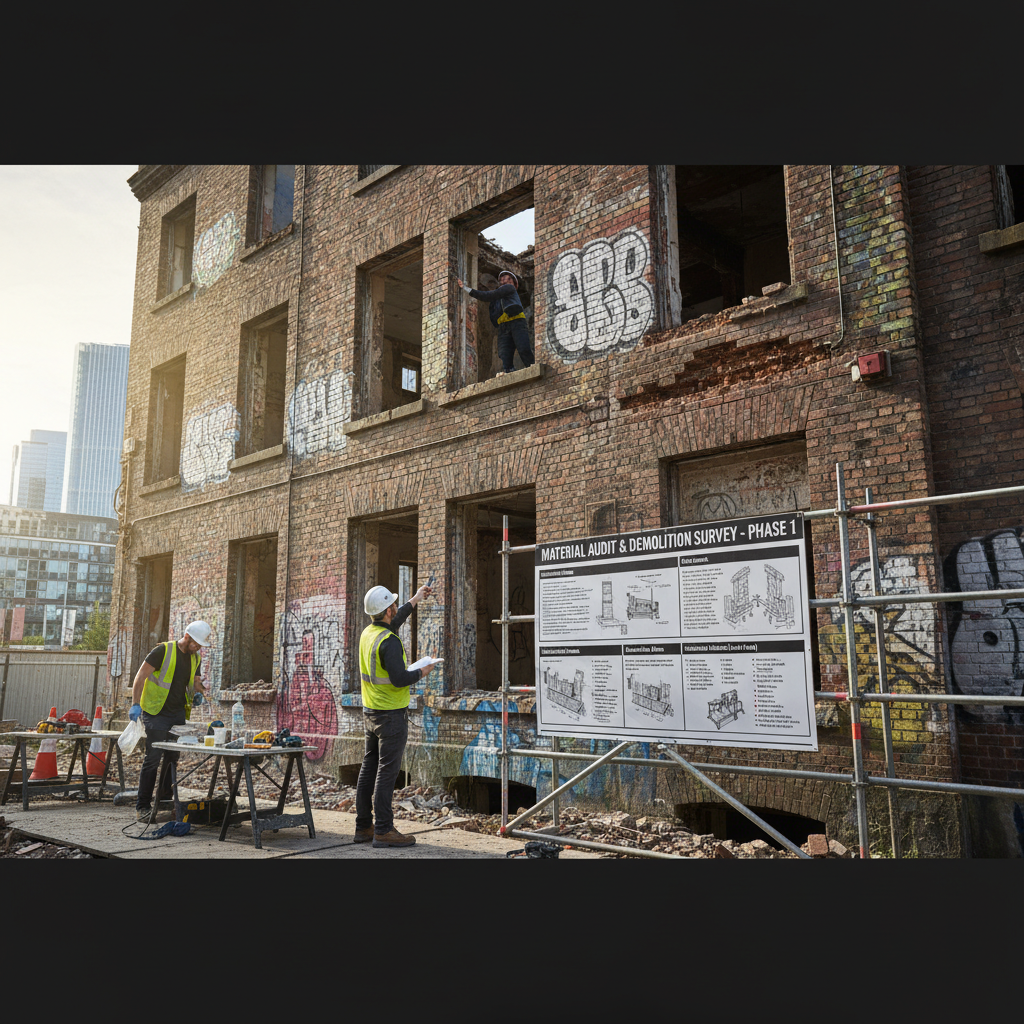
Tagged buildings. Full material audit.
Every source building is surveyed before demolition begins. We document construction date, brick manufacturer where traceable, original mortar composition, and structural history. Each pallet carries a chain-of-custody tag back to the street address it came from.
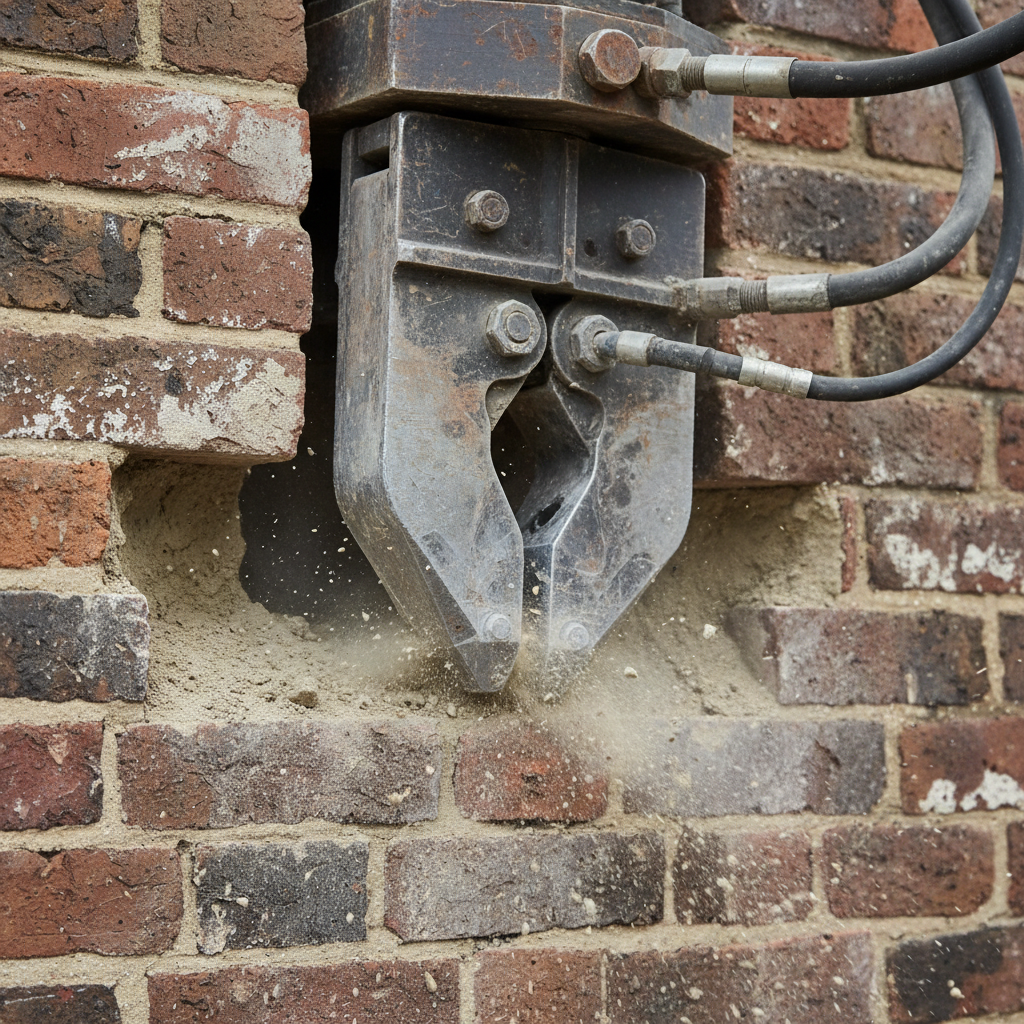
Hydraulic jaws. Hand finish.
Reclaimed bricks pass through our hydraulic jaw system which cracks mortar at the original bed-face bond — never grinding into the fired clay. Tumblers remove residual lime dust. Hand-finishing teams inspect each brick and dress the frogs with wire brushes, exposing the original firing blush.

Crush-strength rated. Frost-classified.
Every batch is sampled to BS EN 771-1 standards. We test compressive strength, water absorption, and freeze-thaw cycling. Bricks are graded F2 (severe frost exposure), F1 (moderate), or F0 (sheltered) — the classification printed on every pallet ticket so your engineer doesn't have to ask.
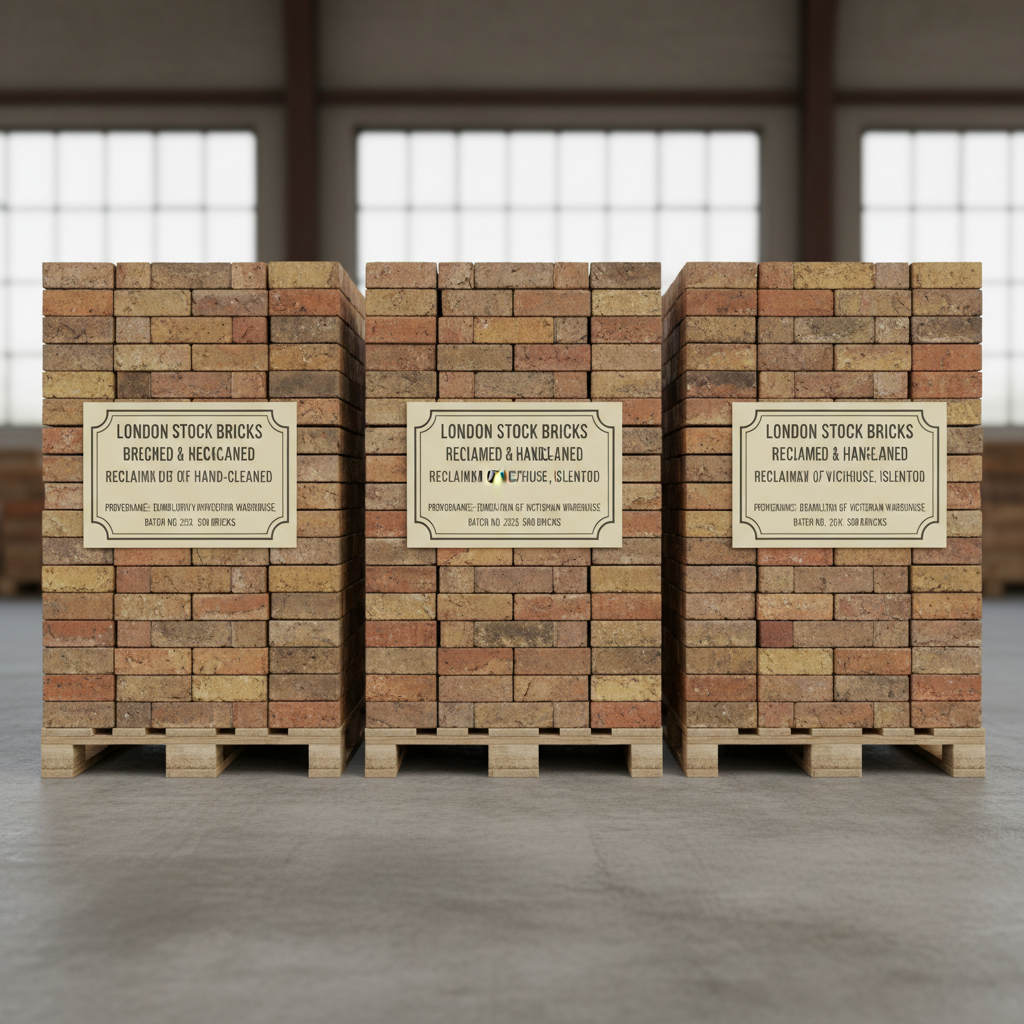
Palleted. Provenance-documented. Ready.
Graded bricks are stacked on heat-treated pallets in standard quantities of 500 or 1,000. Each pallet ships with a provenance certificate stating source address, demolition date, batch grade, and quantity. Lead times are typically 3–5 working days from order confirmation.
The finished product —
ready to specify.
Each type carries its provenance, era, crush-strength grade, and current available quantity. Updated weekly.
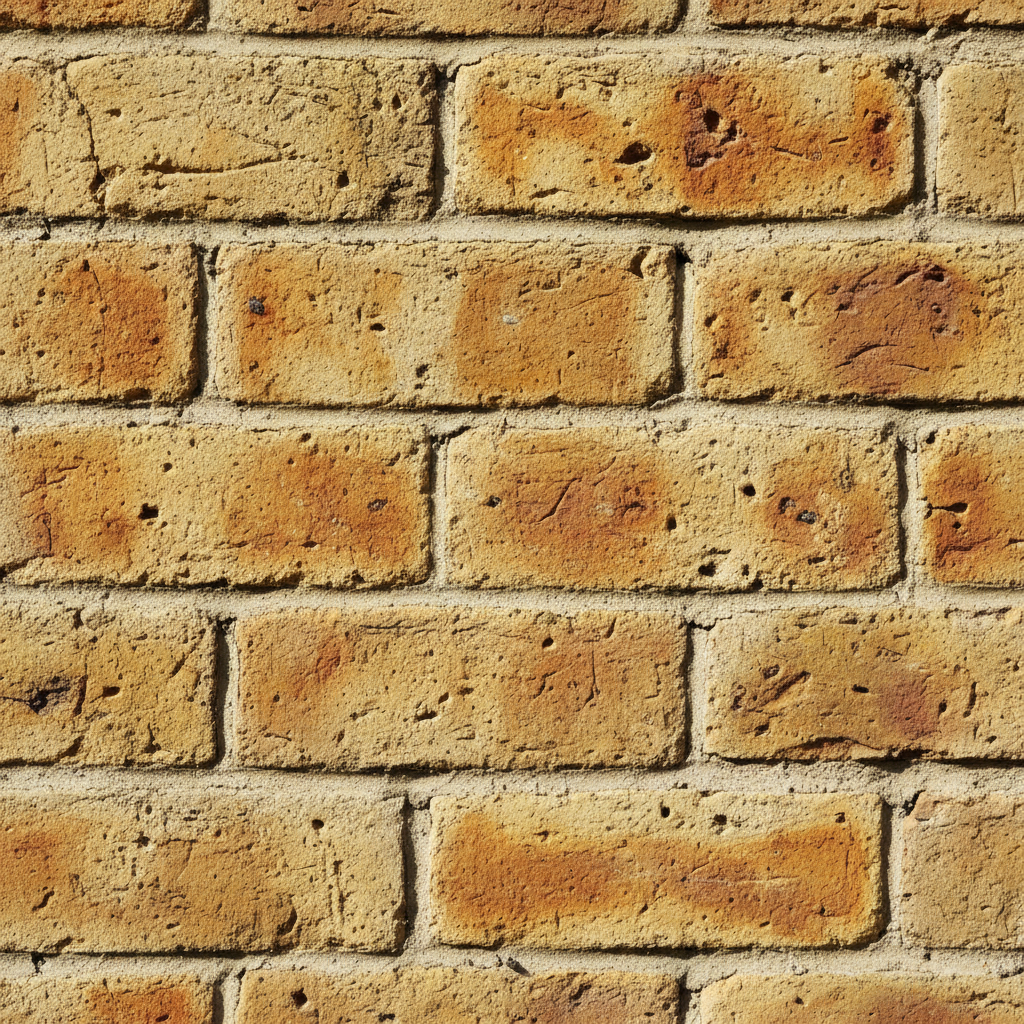
Victorian London Stock
Bethnal Green, E2 · 1880–1895
Buff-yellow with amber fire flash
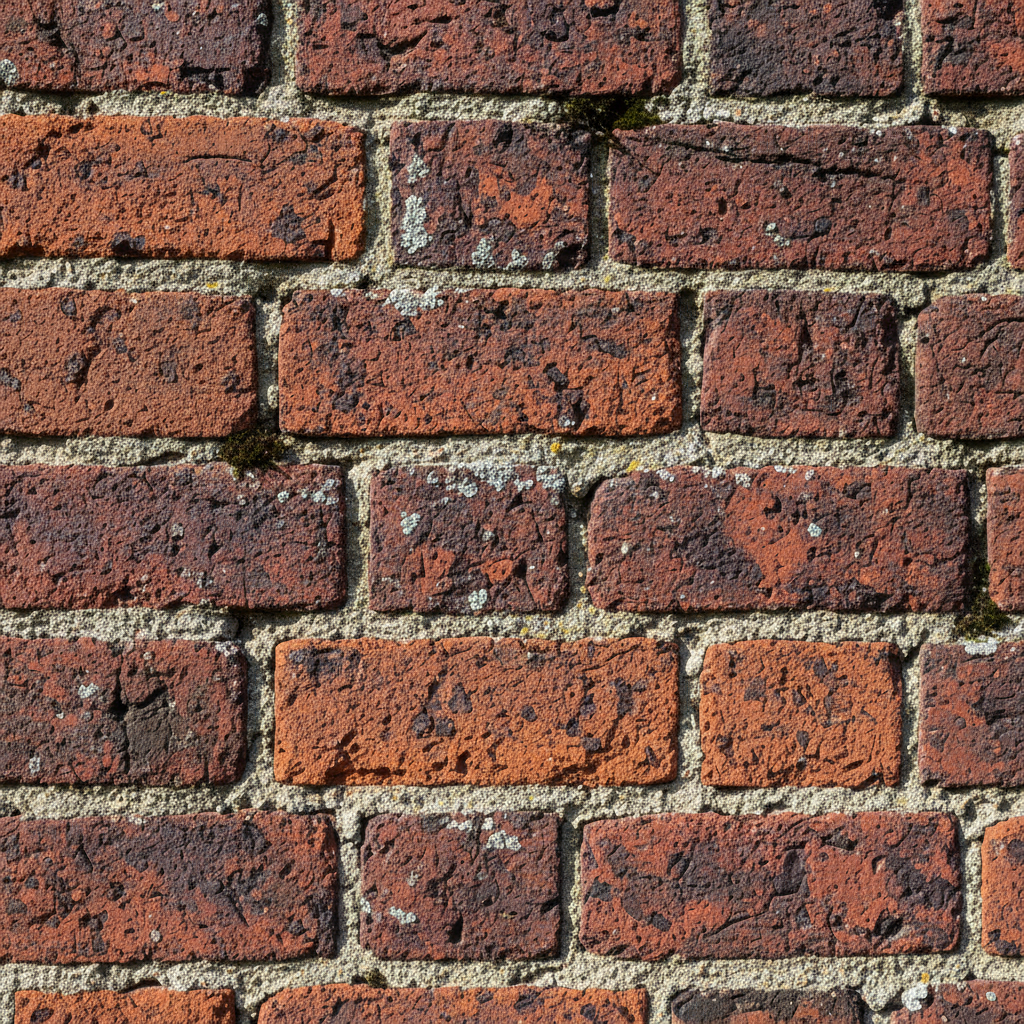
Edwardian Red Wire-Cut
Hackney, E8 · 1900–1912
Deep red with manganese mottling
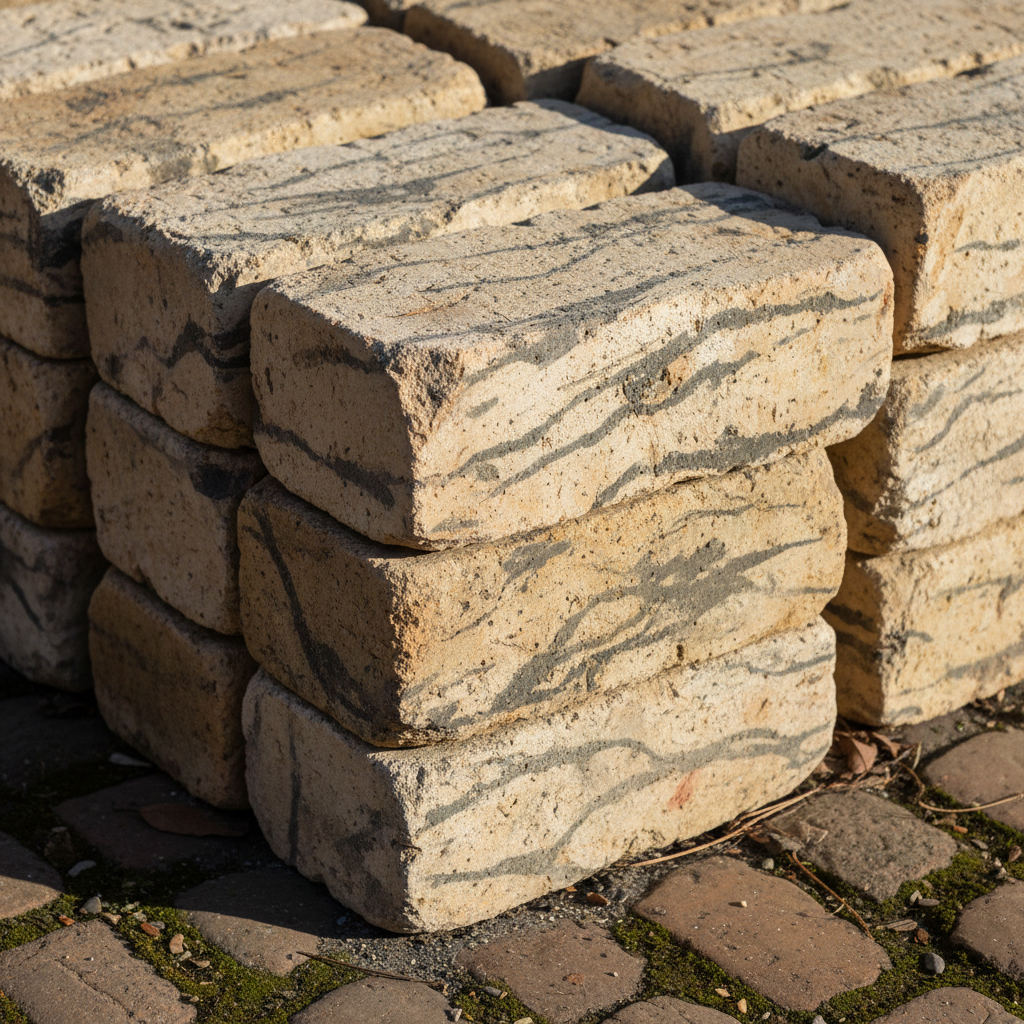
Imperial Stock
Islington, N1 · 1860–1880
Pale buff with grey veining
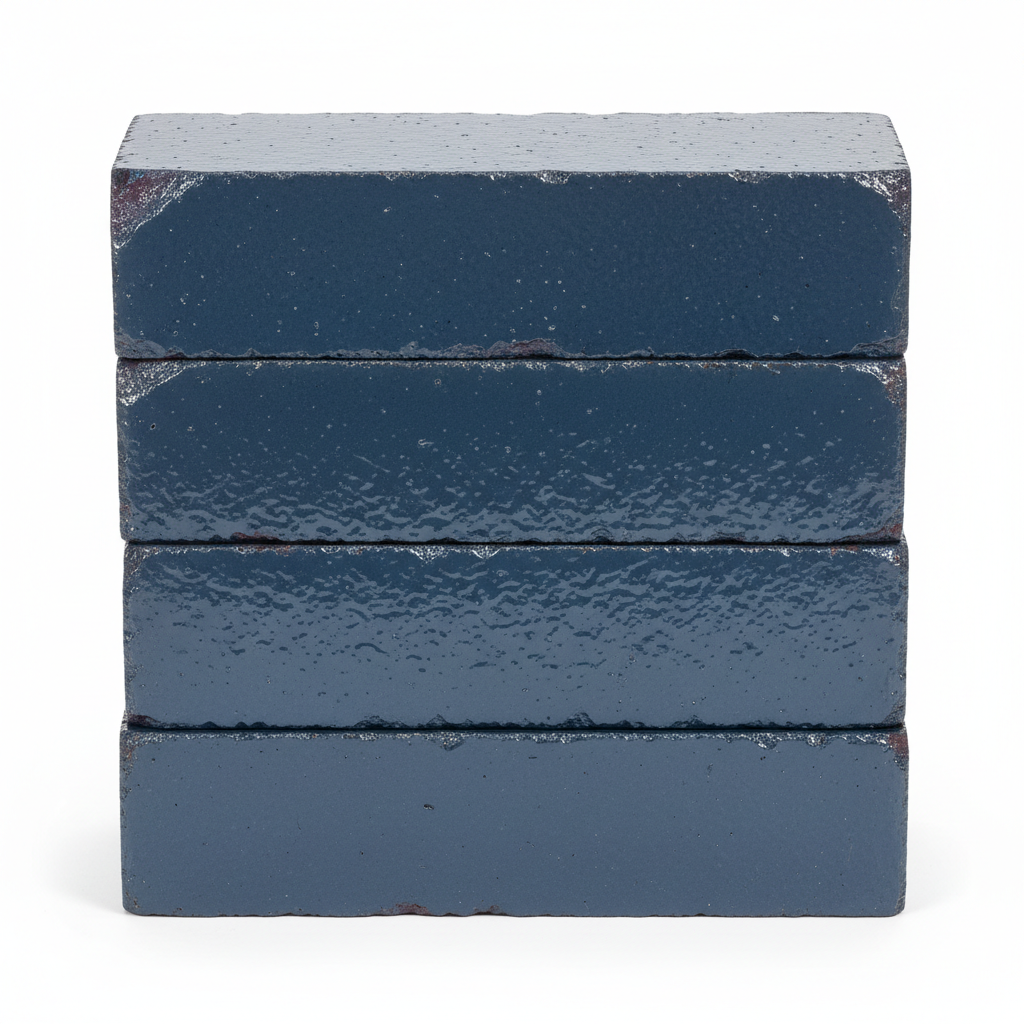
Engineering Blue
Bermondsey, SE1 · 1875–1890
Blue-grey vitrified surface
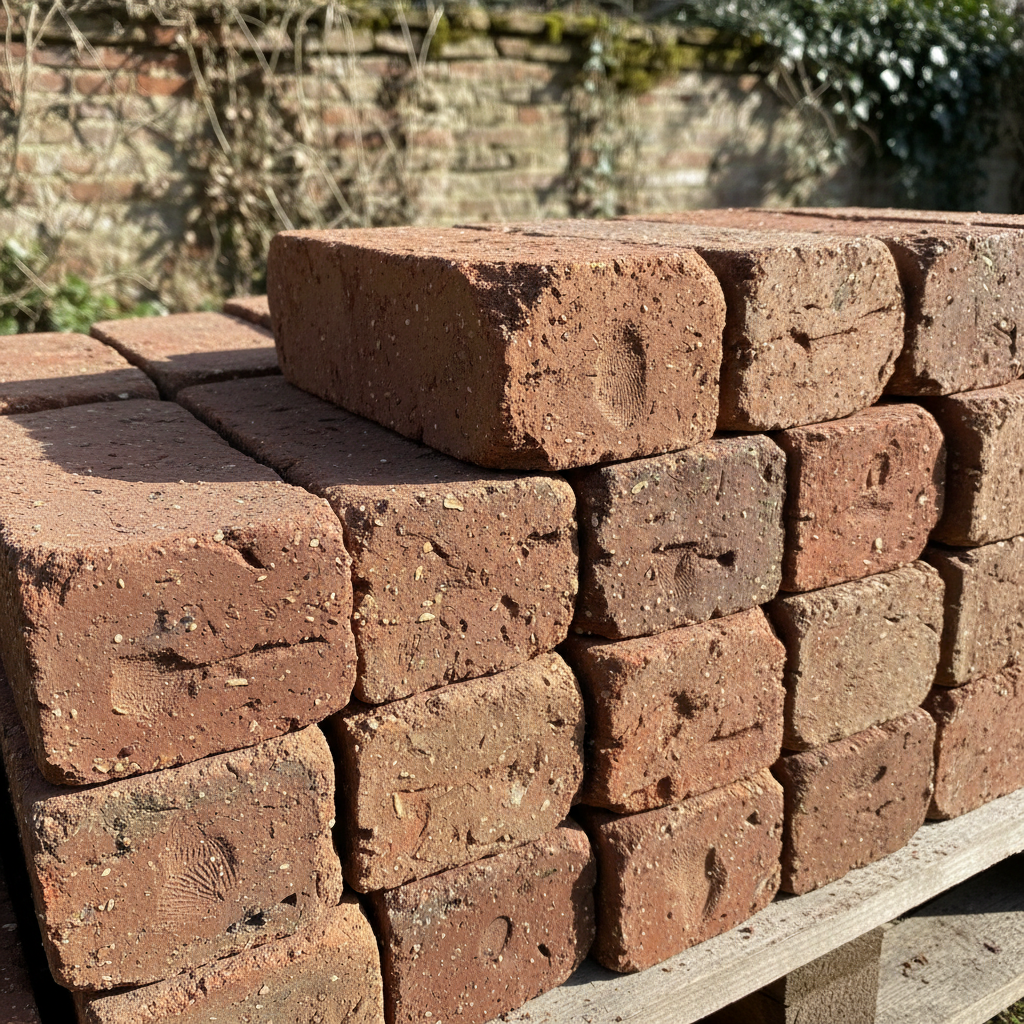
Handmade Country
Bromley, BR1 · 1840–1860
Russet-red with sand creases
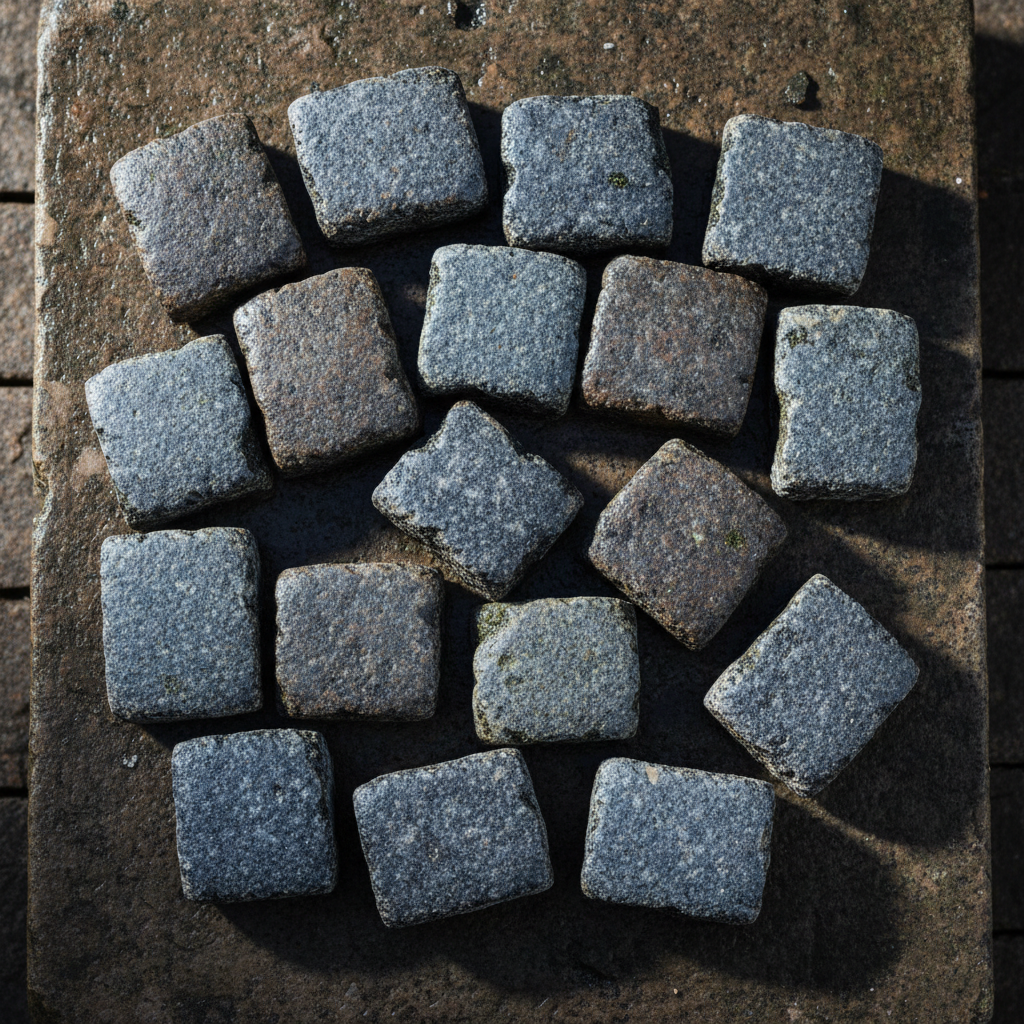
Reclaimed Paving Setts
Various, SE & SW London · 1890–1920
Blue-grey weathered cobble face
Grading specifications — BS EN 771-1.
Every pallet ticket carries the frost classification, compressive strength mean, and absorption percentage. Your structural engineer won't need to call us for the data sheet.
All test data available on request. Batch-specific certificates included with pallet delivery. Referenced to BS EN 771-1:2011+A1:2015.
All test data available on request. Batch-specific certificates included with pallet delivery. Referenced to BS EN 771-1:2011+A1:2015.
All test data available on request. Batch-specific certificates included with pallet delivery. Referenced to BS EN 771-1:2011+A1:2015.
The Salvage Grading Guide
12-page PDF covering our full classification system, test methodology, specifying guidance for heritage projects, and BREEAM documentation requirements. Used by 340+ architects.
Get a Reclamation Quote
Tell us what you need and we'll send a detailed quotation within one working day — including provenance certificates, grading data sheets, and delivery estimate to your project postcode.
Reclamation Quote Request
Response within one working day · No obligation
The Salvage Grading Guide
12 pages · BS EN 771-1 · BREEAM documentation
Enter your email and we'll send the PDF instantly. We'll also send you grading updates when new batches arrive — no more than once a month.
No spam. Unsubscribe any time.